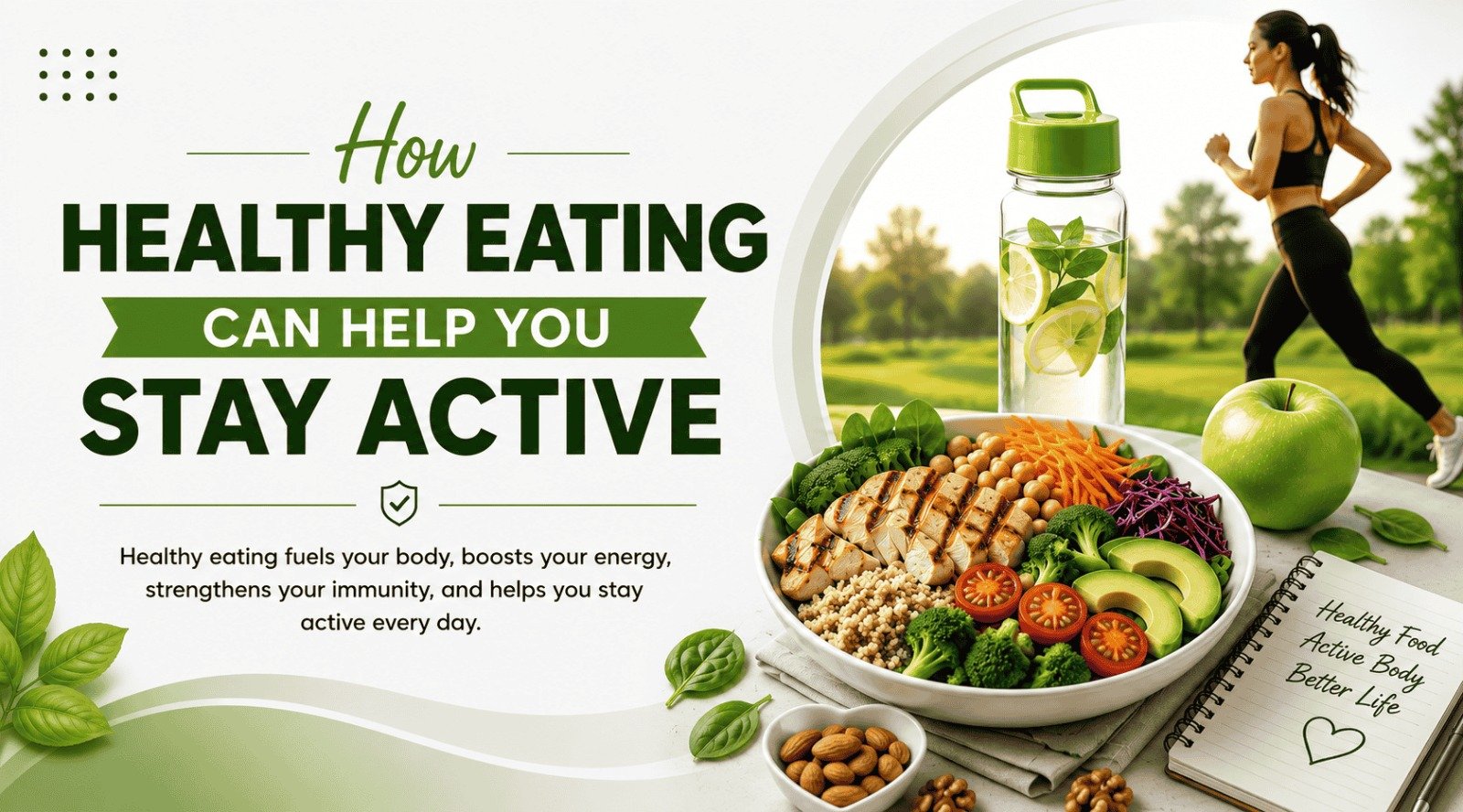
Eating well can make it easier to stay active throughout the day. Your body needs energy from food to support movement, exercise, work, and everyday activities.
A balanced diet does not need to be complicated. Choosing a variety of nutritious foods, drinking enough fluids, and eating regular meals can help support steady energy and recovery. However, food is only one part of staying active. Sleep, exercise, and overall lifestyle also matter.
How Food Supports Daily Energy
Your body uses energy for everything from walking and working to exercising and playing sports. Carbohydrates, fats, and protein all provide important nutrients that support different functions.
For example, foods such as whole grains, fruits, vegetables, beans, and potatoes can provide carbohydrates. Protein-rich foods can include eggs, fish, poultry, beans, dairy products, and other protein sources.
Choosing a variety of foods can help you get the nutrients your body needs.
Eat Balanced Meals
A balanced meal can include several types of food rather than relying heavily on one category.
Try combining:
Vegetables or fruit
Whole grains or other carbohydrate sources
Protein-rich foods
Healthy sources of fat
Water or another suitable drink
For example, a meal could include grilled chicken, brown rice, vegetables, and fruit. Another option might be oatmeal with fruit, yogurt, and nuts.
The goal is not to make every meal perfect. Instead, focus on making nutritious choices consistently.
Get More on WHO.int
Protein Helps Support Recovery
Physical activity places demands on your muscles. Protein provides amino acids that the body uses to build and maintain tissues.
Good protein sources include:
Eggs
Fish
Chicken
Lean meats
Beans
Lentils
Yogurt
Milk
Nuts and seeds
Spreading protein throughout the day can be a practical way to include it in your meals.
However, eating more protein is not automatically better. Your overall diet and individual needs matter.
Carbohydrates Can Fuel Activity
Carbohydrates are an important energy source, especially during moderate and higher-intensity physical activity.
Useful carbohydrate sources include:
Oatmeal
Brown rice
Potatoes
Whole-grain bread
Fruit
Beans
Whole-grain pasta
Instead of avoiding carbohydrates completely, choose nutritious sources and include them as part of balanced meals.
Stay Hydrated
Fluids are also important when you are active. You lose water through normal body processes and, during exercise, through sweating.
Water is usually a simple choice for staying hydrated. Your fluid needs can change depending on factors such as temperature, activity level, and how much you sweat.
During long or intense activities, especially in hot conditions, hydration becomes even more important.
Choose Foods That Fit Your Lifestyle
Healthy eating should be realistic.
If you have a busy work schedule, preparing simple meals in advance may make it easier to avoid relying on less nutritious convenience foods.
For example, you can prepare:
Overnight oats
Rice and chicken bowls
Vegetable and bean meals
Yogurt with fruit
Sandwiches with lean protein
Cut vegetables and fruit for snacks
Planning ahead can make healthy choices easier when you are short on time.
What to Eat Before and After Exercise
Your food choices can also depend on when you exercise.
Before activity, a meal or snack containing carbohydrates can provide energy. If you have several hours before exercising, you may be able to eat a normal balanced meal.
After exercise, eating a meal or snack containing protein and carbohydrates can support recovery and replenish energy stores.
There is no single meal that works for everyone. Your activity, schedule, preferences, and individual nutritional needs all play a role.
Healthy Eating Is Part of an Active Lifestyle
Nutrition alone cannot replace physical activity. Staying active also requires regular movement and appropriate exercise.
A healthy lifestyle can include:
Regular physical activity
Balanced meals
Adequate hydration
Sufficient sleep
Stress management
Consistent routines
For example, someone who eats nutritious meals but rarely moves may still benefit from adding regular walking or other enjoyable activities.
Likewise, someone who exercises regularly may find it harder to maintain energy if their diet does not provide enough food or variety.
Simple Habits Can Make a Difference
You do not need to completely change your diet overnight.
Start with small habits such as eating more vegetables and fruit, choosing whole-grain foods more often, including a protein source with meals, and keeping water available during the day.
Over time, these habits can become part of your normal routine.
Frequently Asked Questions
Can healthy eating give you more energy?
A balanced diet provides nutrients and energy that your body needs for daily activities. However, energy levels can also be affected by sleep, stress, physical activity, and other factors.
What should I eat before exercise?
A meal or snack containing carbohydrates can provide energy before physical activity. The best choice depends on the type of exercise, timing, and your individual tolerance.
Is protein important for active people?
Yes. Protein helps the body maintain and repair tissues, including muscles. Good sources include eggs, fish, poultry, dairy products, beans, lentils, nuts, and seeds.
How much water should I drink when exercising?
Fluid needs vary from person to person. Activity level, temperature, exercise duration, and sweating can all affect hydration needs. Drinking regularly and paying attention to thirst can help.
Do I need a special diet to stay active?
Not necessarily. Many people can support an active lifestyle with a varied, balanced diet that provides enough energy, protein, carbohydrates, fats, vitamins, minerals, and fluids.