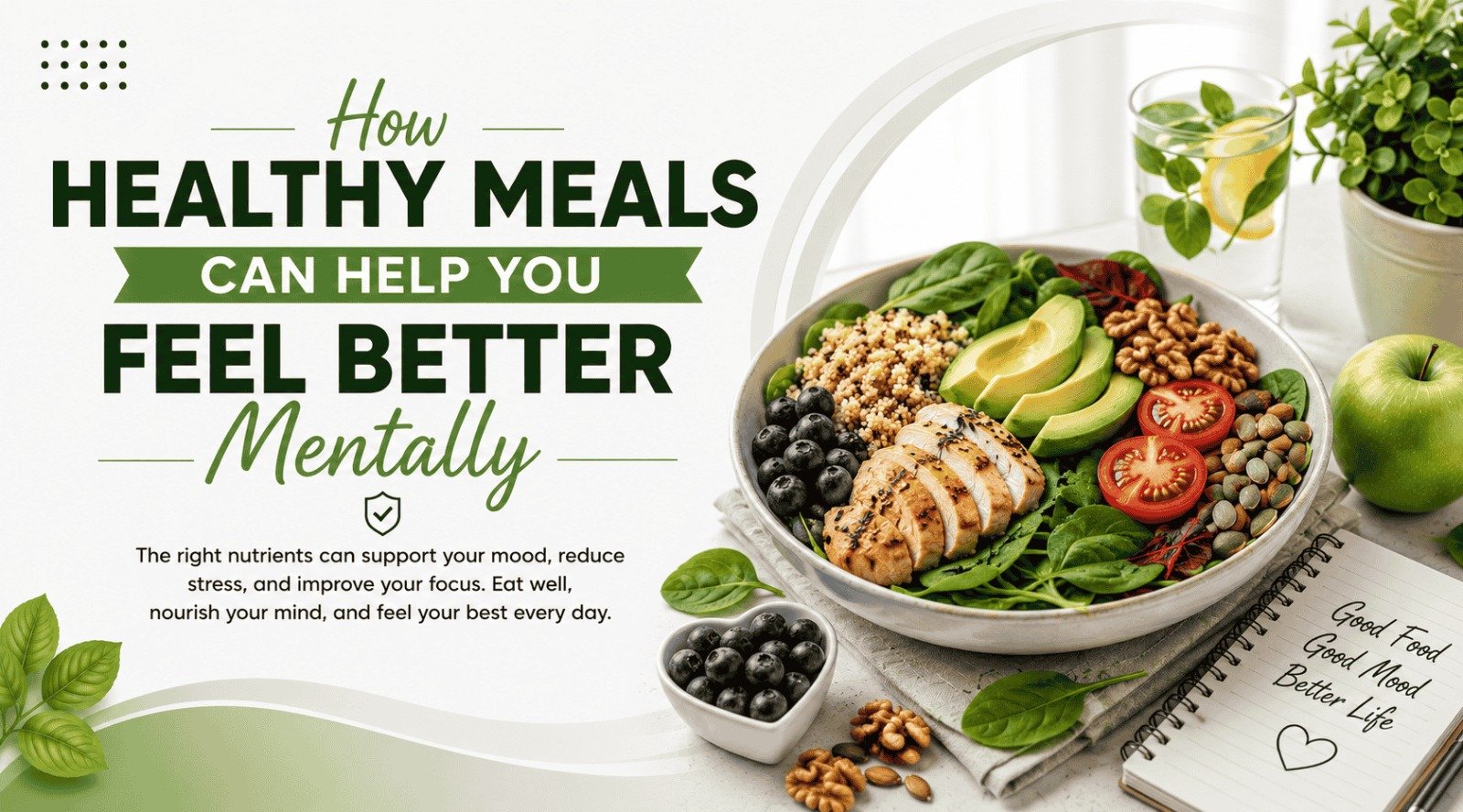
What you eat can affect more than your physical health. Your brain needs energy, fluids, vitamins, minerals, protein, carbohydrates, and healthy fats to support normal body and brain functions. When meals are irregular or lack important nutrients, you may also notice changes in energy, focus, or how you feel during the day.
The good news is that improving your meals does not require a strict diet. A balanced eating pattern with vegetables, fruits, whole grains, protein foods, healthy fats, and enough water can support overall well-being. However, food is only one part of mental health and should not replace professional care when you are experiencing ongoing or severe symptoms.
How Food Can Support Your Mental Well-Being
Your brain is active throughout the day, so it needs a steady supply of nutrients and energy. Regular, balanced meals can help support energy and concentration.
For example, a meal containing whole grains, vegetables, protein, and healthy fats can provide a broader mix of nutrients than a meal based mainly on highly processed foods.
In addition, eating regularly may help you avoid becoming extremely hungry and relying on quick food choices later. Staying hydrated is also important because fluids support normal body functions and can affect how you feel and concentrate.
Foods to Include in Healthy Meals
There is no single food that can guarantee a better mood. Instead, focus on an overall healthy eating pattern.
Useful choices include:
| Food Group | Examples |
|---|---|
| Fruits | Berries, oranges, apples, bananas |
| Vegetables | Spinach, broccoli, carrots, tomatoes |
| Whole Grains | Oatmeal, brown rice, whole-grain bread |
| Protein | Eggs, beans, lentils, fish, poultry |
| Healthy Fats | Nuts, seeds, avocado, olive oil |
| Dairy or Alternatives | Yogurt, milk, fortified alternatives |
These foods provide different nutrients that your body needs. Federal nutrition guidance also recommends choosing a variety of nutrient-rich foods as part of a healthy eating pattern.
Eat Regular Meals for More Stable Energy
Skipping meals can make it harder to maintain consistent energy throughout the day.
Instead, try to build a simple routine around breakfast, lunch, and dinner. Depending on your needs, you can also include nutritious snacks.
For example, oatmeal with fruit and nuts can provide carbohydrates, fiber, protein, and healthy fats. Similarly, a lunch containing vegetables, beans or lean protein, and whole grains can create a more balanced meal.
The goal is consistency rather than perfection.
Choose Foods That Support Overall Brain Health
Healthy fats, protein, whole grains, fruits, and vegetables can all have a place in a balanced diet.
Fish, nuts, seeds, beans, and vegetables are especially useful foods to include because they provide a range of nutrients. However, it is better to focus on the whole eating pattern rather than searching for one “magic” food.
Research has found associations between healthier dietary patterns and better mental health, but researchers are still studying exactly how diet and mental well-being are connected.
Limit Foods That Leave You Feeling Worse
You do not have to completely eliminate your favorite foods. However, it can help to avoid making highly processed foods and sugary drinks the main part of your diet.
Instead, add more nutrient-rich foods to your normal meals.
For example, replace a sugary drink with water more often, choose fruit instead of a heavily processed snack sometimes, or add vegetables to a meal that normally contains very few.
Small changes can be easier to maintain than extreme diets.
Your Gut and Mental Well-Being
The relationship between the digestive system and the brain is an active area of research. Diet can influence the gut microbiome, while the gut and brain communicate through several biological pathways.
Healthy foods such as vegetables, fruits, beans, whole grains, and other fiber-rich foods can support a nutritious eating pattern.
However, claims that a particular food can directly “cure” anxiety or depression go beyond what the evidence supports. Nutrition can be part of a healthy lifestyle, but it is not a substitute for appropriate mental health treatment.
Simple Meal Ideas for Better Eating Habits
Healthy eating does not need to be complicated.
Try simple combinations such as:
- Oatmeal + berries + nuts
- Eggs + whole-grain toast + vegetables
- Greek yogurt + fruit + seeds
- Brown rice + beans + mixed vegetables
- Grilled fish + vegetables + whole grains
- Chicken + salad + avocado
These are examples rather than a required meal plan. Choose foods that fit your preferences, budget, culture, and nutritional needs.
Healthy Food Is One Part of Mental Health
Eating well can support your overall health, but mental well-being depends on more than nutrition. Sleep, physical activity, social connections, stress management, and professional support can also matter.
If low mood, anxiety, sleep problems, appetite changes, or other distressing symptoms continue for two weeks or more, consider speaking with a qualified healthcare professional.
Get More on https://www.nimh.nih.gov/health/topics/caring-for-your-mental-health?utm_source=chatgpt.com
Frequently Asked Questions
Can healthy meals improve your mood?
A healthy eating pattern may support overall mental and emotional well-being. However, food should not be viewed as a guaranteed treatment for depression, anxiety, or other mental health conditions.
What foods are good for mental well-being?
Fruits, vegetables, whole grains, beans, nuts, seeds, fish, and other nutrient-rich foods can form part of a balanced diet. Variety is more important than relying on one specific food.
Can skipping meals affect how you feel?
Irregular eating can make it harder to maintain consistent energy. Eating regular, balanced meals may help support energy and concentration throughout the day.
Should I stop eating sugar completely?
You do not necessarily need to eliminate sugar completely. Instead, focus on an overall balanced diet and limit foods and drinks with large amounts of added sugar.
Can food replace treatment for depression?
No. Healthy eating can be part of a healthy lifestyle, but it should not replace professional treatment for depression or another mental health condition.