 by
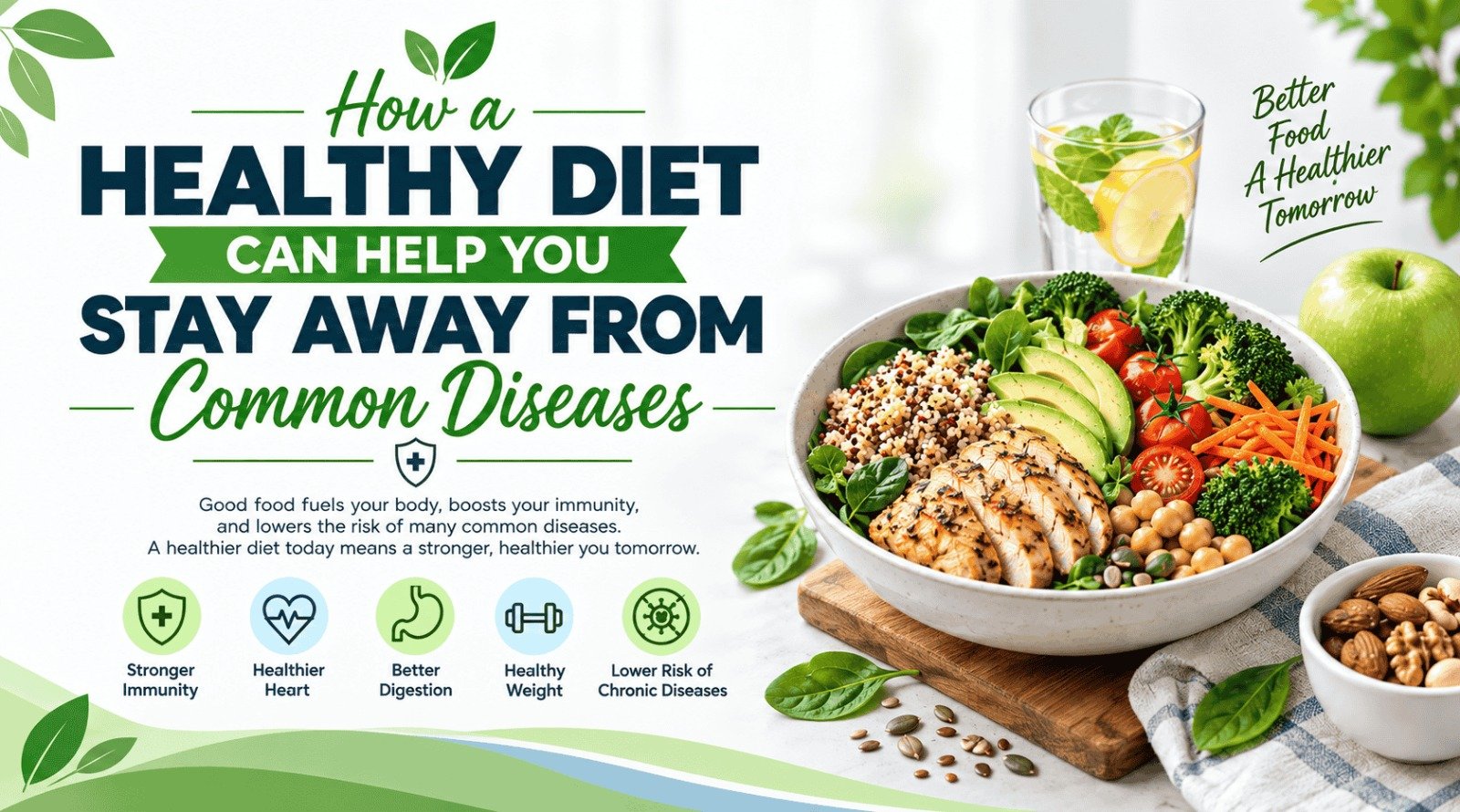
Eating healthy food every day can do more than help you maintain a healthy weight. A balanced diet gives your body important nutrients that support your heart, bones, muscles, immune system, and overall health.
A healthy diet cannot prevent every disease, but it can lower the risk of many common health problems. Making better food choices and building healthy eating habits can help you protect your health as you get older.
How a Healthy Diet Supports Your Body
Your body needs different nutrients to work properly. Fruits, vegetables, whole grains, beans, nuts, seeds, lean proteins, and other nutritious foods provide vitamins, minerals, fiber, protein, and healthy fats.
These nutrients help your body produce energy, maintain healthy body functions, and support your immune system. Eating a variety of foods is one of the easiest ways to give your body the nutrients it needs.
Healthy Food and Heart Health
Heart disease is one of the major health concerns around the world. Your diet can play an important role in supporting heart health.
Foods that are rich in fiber and lower in saturated fat can be part of a heart-healthy eating pattern. Fruits, vegetables, whole grains, beans, and fish are useful choices.
It is also helpful to limit excessive amounts of salt, added sugar, and highly processed foods.
A Healthy Diet Can Help Control Blood Sugar
The foods you eat can affect your blood sugar levels. Regularly choosing high-fiber foods, vegetables, whole grains, and balanced meals can support better blood sugar management.
Maintaining a healthy weight and staying physically active are also important for reducing the risk of type 2 diabetes.
Healthy Eating and Stronger Bones
Your bones need important nutrients such as calcium and vitamin D. Dairy products, fortified foods, leafy green vegetables, beans, and some fish can provide nutrients that support bone health.
Eating a balanced diet throughout life can help your body maintain strong bones and muscles.
Eating Well Can Support a Healthy Weight
Being overweight can increase the risk of several health problems, including type 2 diabetes, heart disease, and some other conditions.
A healthy diet can help you manage your weight when combined with regular physical activity. Foods that contain fiber and protein can also help you feel full for longer.
Instead of following extreme diets, focus on reasonable portions and nutritious foods that you can enjoy regularly.
Foods That Can Support Better Health
Try to include a variety of these foods in your meals:
- Fresh fruits and vegetables
- Whole grains
- Beans and lentils
- Nuts and seeds
- Fish and other lean proteins
- Low-fat or fat-free dairy products
- Healthy oils in moderate amounts
- Plenty of water
Eating different foods helps provide a wider range of nutrients.
Foods to Limit
You do not need to completely avoid your favorite foods. However, eating large amounts of certain foods regularly may make it harder to maintain a healthy diet.
Try to limit foods and drinks that are high in added sugar, sodium, saturated fat, and calories. These can include sugary drinks, heavily processed snacks, and many fast-food meals.
The goal is not perfection. The goal is to make healthier choices most of the time.
Simple Ways to Build a Healthier Diet
You can improve your eating habits without making major changes all at once.
Start by adding more vegetables to your meals. Choose whole grains more often and drink water instead of sugary drinks. You can also prepare more meals at home so you have better control over the ingredients.
Small changes can become long-term habits when you make them gradually.
A Healthy Diet Is Only One Part of Disease Prevention
Food is important, but it is not the only factor that affects your health. Regular physical activity, enough sleep, maintaining a healthy weight, avoiding tobacco, and getting recommended health screenings can also help reduce health risks.
Some diseases cannot be prevented through diet alone. If you have a health condition or special dietary needs, talk with a qualified healthcare professional before making major changes to your diet.
Frequently Asked Questions
Can a healthy diet prevent all diseases?
No. A healthy diet cannot prevent every disease. However, a nutritious eating pattern can help support overall health and may lower the risk of several chronic diseases.
What is the most important food to eat?
There is no single food that provides everything your body needs. Eating a variety of fruits, vegetables, whole grains, proteins, and other nutritious foods is a better approach.
Should I completely stop eating unhealthy foods?
Not necessarily. Focus on balance and moderation. Eating nutritious foods most of the time is more realistic than trying to follow a perfect diet.
Can healthy eating help with weight management?
Yes. A balanced diet with reasonable portions can support healthy weight management, especially when combined with regular physical activity.
Get More on https://www.niddk.nih.gov/